Monday, 14 January 2019

Media Exam Dates

Paper 1 Media Messages: 5th June (am)

  • News = big topic
  • 2 out of 3: Magazines, Adverts, Music videos
Paper 2 Evolving Media 13th June (pm)
  • TV Drama  = big topic
  • 2 out of 3: Film, Gaming, Radio

Lucozade Advert Essay

There is a mid-close-up shot of Gareth Bale portraying his jersey as well as his serious face expression to the audience, therefore, he is giving the direct address. Lucozade have deliberately used Bale to sponsor in one of their adverts because he is top end athlete (footballer who plays for Real Madrid which the football club acquired him for a huge amount of money) who has a clean reputation (meaning that he has never been frowned upon by his team nor the media) so that the product can't be looked down on by the consumers. He is nicely groomed with his hair being gelled and that he is cleanly shaven. There is a line of dirt on his chin which further portrays that he plays a sport. Since Bale is expensive for the Real Madrid Football Club (which is one of the best football clubs in the world), this makes him the perfect sponsor for Lucozade and to use him as the face of the brand. Lucozade has written the slogan "In a different league" is a pun for two different things: the fact that Bale is literally in a different league, from the transition from the Barclays Premier League to the Spanish League "La Liga" and the belief that Lucozade is that the superior product and that it is on top of the competition. On the top right corner of the printed advert, there is Bale's football card which is his player profile. This shows authenticity to the consumer to further convince them to buy the product. The colours that Lucozade has used for the advert: blue and yellow reinforces branding as those are the colours used for their brand. As yellow is a bright colour and their secondary colour, the consumer subconsciously looks for the colour as it stands out for them. The features of the advert that has yellow are the slogan, their brand name at the bottom left corner which is followed by a bold "YES" which is covered in white and the product at the bottom right corner. There is a close-up shot of the product which captures the full length of the product. This gives the product credibility because it stands out and it is a persuasive ethos to the consumer, as it convinces the consumer to buy the product and they will be empowered to be "in a different league" above everybody else.
Lucozade Advert Analysis

Image result for in a different league advert


  • Gareth Bale - footballer
    • Real Madrid (ex Tottenham Hotspurs)
    • Leader, "clean" reputation
    • grooming/styling: hair, clean shaven
    • links to Lucozade as a brand
    • Expensive acquisition for Real Madrid
  • Mid-close up shot (MCU) - portrays facial expression and the top of the football kit
  • Slogan: "In a different league"
    • Double meaning: Bale: Transfer from premiership to la liga
    • Lucozade: superior product
  • Top right - player profile: authenticity (Football cards)
  • Colour scheme: reinforces branding
    • Blue and Yellow
  • Close up (CU) in the bottom right of the product
    • Persuasive-ethos/credibility

There is a mid close up shot of Gareth Bale portraying his jersey as well as his serious face expression to the audience therefore he is giving direct address. Lucozade have deliberately used Bale to sponsor in one of their adverts because he is top end athlete (footballer who plays for Real Madrid which the football club acquired him for a huge amount of money) who has a clean reputation (meaning that he has never been frowned upon by his team nor the media) so that the product can't be looked down on by the consumers. He is nicely groomed with his hair being gelled and that he is clean shaven. There is a line of dirt on his chin which further portrays that he plays sport. Since Bale is an expensive for the Real Madrid Football Club (which is one of the best football clubs in the world), this makes him the perfect sponsor for Lucozade and to use him as the face of the brand. Lucozade has written the slogan "In a different league" is a pun for two different things: the fact that Bale is literally in a different league, from the transition from the Barclays Premier League to the Spanish League "La Liga" and the belief that Lucozade is that the superior product and that it is on top of the competition. On the top right corner of the printed advert, there is Bale's football card which is his player profile. This shows authenticity to the consumer to further convince them to buy the product. The colours that Lucozade has used for the advert: blue and yellow reinforces branding as those are the colours used for their brand. As yellow is a bright colour and their secondary colour, the consumer subconsciously look for the colour as it stands out for them. The features of the advert that has yellow are the slogan, their brand name at the bottom left corner which is followed by a bold "YES" which is covered in white and the product at the bottom right corner. There is a close up shot of the product which captures the full length of the product. This gives the product credibility because it stands out and it is a persuasive ethos to the consumer, as it convinces the consumer to buy the product and they will empowered to be "in a different league" above everybody else.

Sunday, 13 January 2019

Old Spice Advert Essay

Isaiah Mustafa is a sponsor for the Old Spice brand which has a range of male grooming products encompassing deodorants and antiperspirants, shampoos, body washes and soaps. On the printed advert, it shows a mid-close up shot of Mustafa merged with the beach with a volcano on top of his head and with blue skies on top of him. This is to resemble the Bahamas in the Caribbean so that it can initially catch the audience's attention. On the advert, it is written "Old Spice Bahamas scent comes from an antiperspirant mine in the Bahamas. This fact has not been fact-checked". This quote makes this a self-referential advert meaning that it is known that it is silly therefore it is a parody to other adverts as it refers to other men's toiletry advert. The advert resembles the landmarks of the Bahamas and referring itself to other adverts gains the advert intertextuality, making this a breaking genre as this breaks boundaries between genres. There are some postmodern theories that can be integrated into the advert such as McLuhan's Global Village Theory, which is the compromisation of time and space and mix and match between two different things (which is the Mustafa and the Bahamas). As this is a man grooming brand, there is always this stereotypical idea of it being used as a way for women to be attracted to the consumer, and this is with no exception with Old Spice, however, it does make fun of the idea. In the 30 second long advert, there are numerous of times when Mustafa said to the women look at their partners and then to look back at him and he is always doing another action where he could be dressed differently or in a different location for example. This could possibly hypnotise the consumer (which are men) into thinking that when they use the product, they could do those actions themselves or do even more and surpass him, as the advert gives them empowerment and authority to do whatever they want to do. Butler's gender performativity is used on this advert and it is that genders (particularly men) are created in how we perform our gender roles and that it is created through performance. This reflects on the performance that is created through Mustafa; how men are stereotypically fit so that they can be shirtless and show off their six-pack abs and them having the capabilities to do anything and this is an example of hegemonic masculinity.

Tuesday, 18 December 2018

Advertising and Marketing

Old Spice - Male grooming products
Isaiah Mustafa Campaign

  • Self-referential advert- knowing that it's silly, referencing other men's toiletry advert
  • Relatively cheap to the mass market
  • Parody/mickey-taking of other adverts.
  • Intertextual
  • Post-modern:
    • Mix and match - time and space
    • Breaking genre
    • Reality/Fantasy
  • "Become yourself"/"The mark of a man"
Bathes: Denotation/Connotation (Semiotics theory)
  • Physical form - what we see or hear (Red rose)
  • Meaning - which relates to society's ideology/cultural context (Romance)
  • Myth - when symbols/signs come to represent whole sets of ideas in a society
Old Spice and gender representation
  • Butler's gender performativity: Gender is created in how we perform our gender roles - there is no essential gender identity behind these roles, it is created in the performance. Performativity is not a singular act but a repetition and a ritual that becomes naturalised within the body.
  • Any feminism concerned only with masculinity and femininity excludes other forms of gender and sexuality. This creates 'gender trouble' for those that do not fix the heterosexual norms. 

Monday, 26 November 2018

Analysing the Big Issue

Go to Moodle and click on the folder titled: Big Issue education front cover
Class Action/Intertextuality

  • When one media product ("text") is only understood in relation to another media product ("text")
Intertextuality on "Class Action" cover:
  • Harry Potter: Harry, Ron, Hermione
  • Handmaid's Tale: Offred
  • Benedict Cumberbatch: Hollywood actor
  • Ozzy Osbourne: Rock Star
  • Miss Jean Brodie: Schoolmistress

Tuesday, 20 November 2018

The Big Issue - Theories around representation

Barthes and semiotics

  • Denotation
  • Connotation
  • Anchorage
  • What this tells us about who/what is represented
Hall and ideology
  • Hall believes that the media reflects dominant ideologies, and the majority of mass media artefacts reinforce generally agreed messages around gender, culture / ethnicity, consumerism, the family, social class and so on. Some artefacts are polysemic (more than two meanings), but most have a limited number of readings, favouring a preferred audience reading.
  • Some audiences take a negotiated position.
  • A small minority might make an oppositional reading.
Prince William Front Cover


  • Dominant: "Prince Charming", Archetype, Privilege - royal
  • Oppositional: Republican - Anti-monarchy, What does the prince know about homelessness
Bake Off Front Cover


  • Intertextuality - to Trump
  • Dominant: Britishness - a "mythical" version, safe, homely
  • Oppositional: all white, not diverse
Gauntlett - a post modern approach
  • Identity is complicated
  • Building your own identity. No fixed representations
  • Post-modern/ mix and match approach
  • Might link to intertextuality: explicit reference to other media products, where the meaning is only apparent in reference to this other text (inter-text).
Van zoonen and Hooks: feminist theories
  • Van Zoonen: Women’s bodies as objects
  • Men’s bodies as spectacle
  • Gender performativity: what we do rather than what we are
  • Gender is contextual
  • Bell Hooks: intersectionality. (Black female) audience to develop an “oppositional gaze.” This refuses to identify with characters
Madonna Front Cover


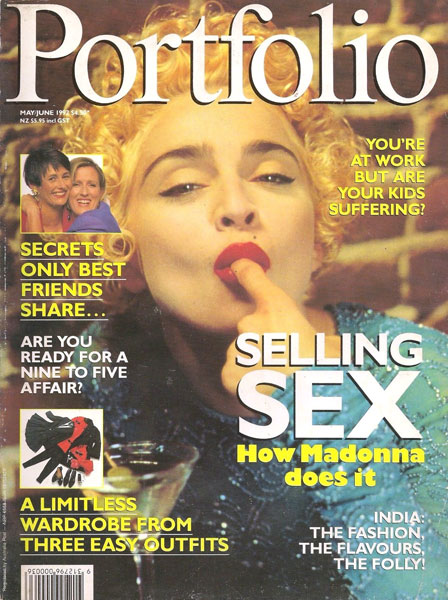
  • Portfolio - objectified, sexual
  • Contrasts with Big Issue where "uncovered" does not link to her sexuality and she is visibly older.
Gilroy and post-colonialism
  • Diaspora* has constructed a transatlantic culture
  • “Other”ness: most non-white representations emphasise otherness (from white, middle-class, male dominant representations), rather than any inherent characteristics
  • (* originates from the movement of Jewish people from middle east Europe, later USA. Refers now to movement of immigrants to the west.)

Tuesday, 6 November 2018

The Big Issue Notes

Notes

  • In 1991, John Bird and Gordon Roddick (founder of the Body Shop cruelty-free toiletries) founded the Big Issue.
  • Made "A Publishing Revolution".
  • Social Enterprise - a business that makes profit, but has social benefits
  • Sold over 200 million copies in the UK since 1991.
  • Expended their business portfolio and expanded their brand to the big issue shop which sells products with a social agenda
  • The big issue invest is also another brand extension which invests in other social enterprise
  • They buy products and doubles the amount
"Ethical Capitalism" - John Bird - making profit, but morally right

"A hand up, not a hand out" - John Bird

"Social exclusion" - refers to those outside of society. Mentally ill, homeless, offenders, addicts

UGC - User Generated Content


The Big Issue

Monday, 29 October 2018

History of Magazines and Key Terms

Early Magazines

  • Magazines appeared in the UK in the late 1700s, although leaflets and posters had been printed by woodblock, then using printing machines, for many hundreds of years.
  • Early magazines include The Gentleman’s Magazine, in 1775 which included news, poetry, history, philosophy
The rise of the mass media
  • It was not until the late 19th century / early 20th century that the mass media started to take off, with wide access to magazines and newspapers, which were easy to buy, and affordable.
  • This pre-dates radio and television (and later, the internet) as a mass form of communication, which allowed the media to speak to huge numbers of audiences
  • Several of these early magazines still exist today, such as “Vanity Fair”
Independent Research
  • IPC
    • Taken over by Time Inc (T.I.) in 2014
    • TI was part of Warner group, one of the biggest conglomerates in the world
      • IPC decided this would save their magazines
      • Now TI is part of Meredith group, huge cross media interests.
    • Bauer Media
      • German company
      • Subsidiaries:
        • Women's weekly
        • Take a break
        • Modern Gardens
        • TV Choice (most sold UK magazine)
        • Kiss
        • 4Music
        • Kerrang
      • Global conglomerate company
    • Dennis
      • Independant
      • Niche products
      • Kung Fu
      • Minecraft
    Advertising in Magazines
    • Without advertising, no magazine could survive. If a magazine did not contain ads, then its COVER PRICE would be three or four times greater.
    • The INCOME for a magazine comes from both sales and advertising. On average, advertising accounts for 70% of magazine income.
    • A magazine with a small CIRCULATION is more dependant on advertising on one with a large one.

    Appeal to Advertisers
    • Magazines enable advertisers to target an audience vary precisely and  specifically
    • Magazine ads can offer more detailed information about a product than a TV commercial.

    Saturday, 27 October 2018

    Magazines: History and Future (Half Term Homework)

    1. Magazines started circulating the UK in the 18th Century. The Scots Magazine, The London Magazine, The Spectator, The Scots Magazine and The Monthly Review are some examples of the magazines that were published in the UK. Back then, the magazines were printed using large hand-engraved blocks.
    2. Magazines were thought to be important because they are distributed to the public either daily, weekly or monthly to deliver messages, news and information to the larger audience. This is extremely useful as technology wasn't as advanced as today meaning television and the internet wasn't invented to distribute the information.
    3. There is a range of different types of magazines: Teen, Gossip, Gardening, Video Games, Fashion, Football, Health and Music.
    4. Both of the Vanity Fair magazines have the masthead at the top of the front page as well as having the main coverline at the bottom. Furthermore, they both present women in the magazines. However, the 1896 front cover has a painting of two women by the sea whereas the 2017 cover has a printed image of Meghan Markle. This is because coloured printers weren't invented at the time, therefore, people have to physically draw to make a front cover. The 2017 cover has adopted the colour scheme from the 1896 cover. They both feature a red and black font colour, however, the 2017 cover has a 3 colour scheme with the added colour of white. Both covers express femininity with Meghan Markle using direct address to grab the attention of the audience. This technique is used so that for the audience, they would think and feel that the magazine is made for them which will persuade them to actually read the magazine. On the other hand, the 1896 cover does not use direct address however it does have two women that were drawn onto the front cover so it does still appeal to women however it is not as effective as the 2017 cover. The 1896 cover portrays two white women so this establishes that at the time this magazine was made, Britain still used women deliberately for men's pleasure as patriarchy was still in society. This is when men have dominance to do anything and they get obeyed by women to stay at home, clean, wash and take care of the children. They were only limited to do one job and that is to be a housewife. As Vanity Fair is clearly a magazine towards women, I am not certain that women were able to read it or to feature in it. Whereas on the 2017 cover, it has a mixed race women engaging with a person from the Royal Family (Prince Harry) which is dominated by white people. This engagement conveys that society is changing; individuals are not following the traditions that were made hundreds of years ago but in fact, they are revolutionising them and setting these new traditions as the norm. Furthermore,  the magazine now shows that women have equal rights with men; they have the will to do whatever they want. Instead of being controlled by men, they have a choice in their careers and modelling for a magazine cover is one of them. 
    5. Each magazine has a circulation, readership, mass audience, niche audience and a subscription. The number of copies the magazine sells is the circulation of the magazine. The mass audience is the readership (the total number of people and not just who buys the magazine) on s very large scale whereas the niche audience is the narrow group of readers with a particular interest. A subscription is a process when the reader pays for copies of magazines at a lower price and the audience will receive them by post. Each magazine has a plug, masthead, puff, cover star, main coverline, banner and skyline. The masthead is simply the tile of the magazine and the plug is the text that 'plugs' a feature that will appear inside the magazine. The cover star is normally featured on the cover and the puff is a story that is given prominence on the cover. The skyline is the text that runs across the top of the cover whereas the banner is the text that runs across the lower section of the cover. Finally, the main coverline is the text that anchors the main image and gives it meaning.
    6. If magazine circulation had dropped in the last 20 years, the magazine companies will find other ways to distribute their messages, news and information such as social media feeds, e-readers, making their own websites, e-zines and freemiums.

    Tuesday, 23 October 2018

    BBC Research Task (Half Term Homework)

    1. How old is the BBC?
    • The BBC was made on the 18th October 1922 making it 96 years old.
    2. Who is Lord Reith and what connection does he have with the BBC?
    • John Reith (1889-1971) was the founder of the BBC.  He was its first general manager when it was set up as the British Broadcasting Company in 1922; and he was its first director general when it became a public corporation in 1927.  He created both the templates for public service broadcasting in Britain; and for the arms-length public corporations that were to follow, especially after World War Two. Reith fought off the politicians' attempts to influence the BBC, while offering the British people programmes to educate, inform and entertain.
    • But in a working life that stretched over 60 years, Reith was at the BBC only 16.  This is the story of a towering figure – physically as well as metaphorically - who was never satisfied with life and who said 'What I was capable of compared with what I've achieved is pitiable.'
    • "Being a son of the manse I was made a good deal of, but I had no friends of my own" - John Reith
    3. When did it start broadcasting Radio 1?
    • BBC Radio 1 started broadcasting on the 30th September 1967 in the United Kingdom, making it 51 years old.
    4. What are the BBC's five Public Purposes, as set out in the Royal Charter?
    • To provide impartial news and information to help people understand and engage with the world around them - The BBC will provide accurate and impartial news, current affairs and factual programming of the highest editorial standards so that all audiences can engage fully with issues across the UK and the world.
    • To support learning for people of all ages - Educational content will help support learning for children and teenagers across the UK, whilst audiences will be encouraged to explore inspiring and challenging new subjects and activities through a range of partnerships.
    • To show the most creative, highest quality and distinctive output and services - Innovative content covering many different genres will be provided across a range of services and platforms, setting the standard both in the UK and globally.
    • To reflect, represent and serve the diverse communities of all of the United Kingdom’s nations and regions and, in doing so, support the creative economy across the United Kingdom - The lives of the people in the United Kingdom today will be accurately and authentically portrayed in the BBC’s output and services to raise awareness of different cultures, contribute to social cohesion and invest in the development of each nation’s creative economy.
    • To reflect the United Kingdom, its culture and values to the world - High quality, accurate, impartial news coverage will be delivered to international audiences, aiding understanding of the UK as a whole.
    5. What is the BBC's Mission?
    • To enrich people's lives with programmes and services that inform, educate and entertain.
    6. What is the BBC's Vision?
    • To be the most creative organisation in the world.
    7. What are the BBC's Values?
    • Trust is the foundation of the BBC: we are independent, impartial and honest.
    • Audiences are at the heart of everything we do.
    • We take pride in delivering quality and value for money.
    • Creativity is the lifeblood of our organisation.
    • We respect each other and celebrate our diversity so that everyone can give their best.
    • We are one BBC: great things happen when we work together.
    8. What does the licence fee cover?
    • Over 90% of the licence fee is spent on BBC TV channels, radio stations, BBC iPlayer and online services.


    9. How is the BBC regulated? How long as this body regulated the BBC and who regulated it before?
    • The BBC is regulated by the Office of Fair Trading (OFT), the European Commission, and Ofcom. Ofcom also regulates some other aspects of the BBC, for example, the BBC is covered by Ofcom's Fairness Code.
    • Ofcom is the UK’s communications regulator. Our relationship with Ofcom is set out in a Memorandum of Understanding.
    • Ofcom started regulating the BBC on the 3rd April 2017 and it became BBC's first external regulator.