Tuesday, 27 March 2018

Fashion Magazines


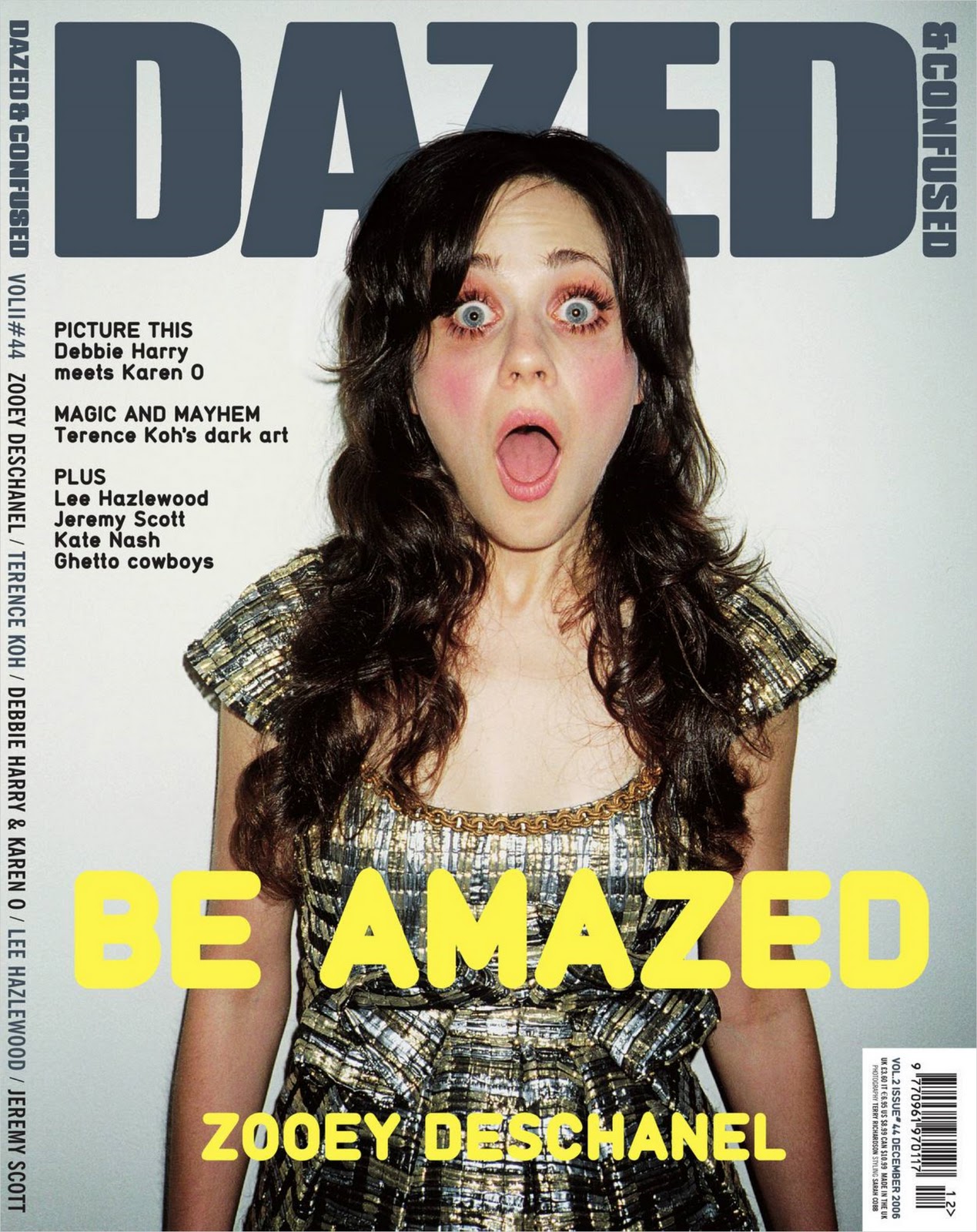
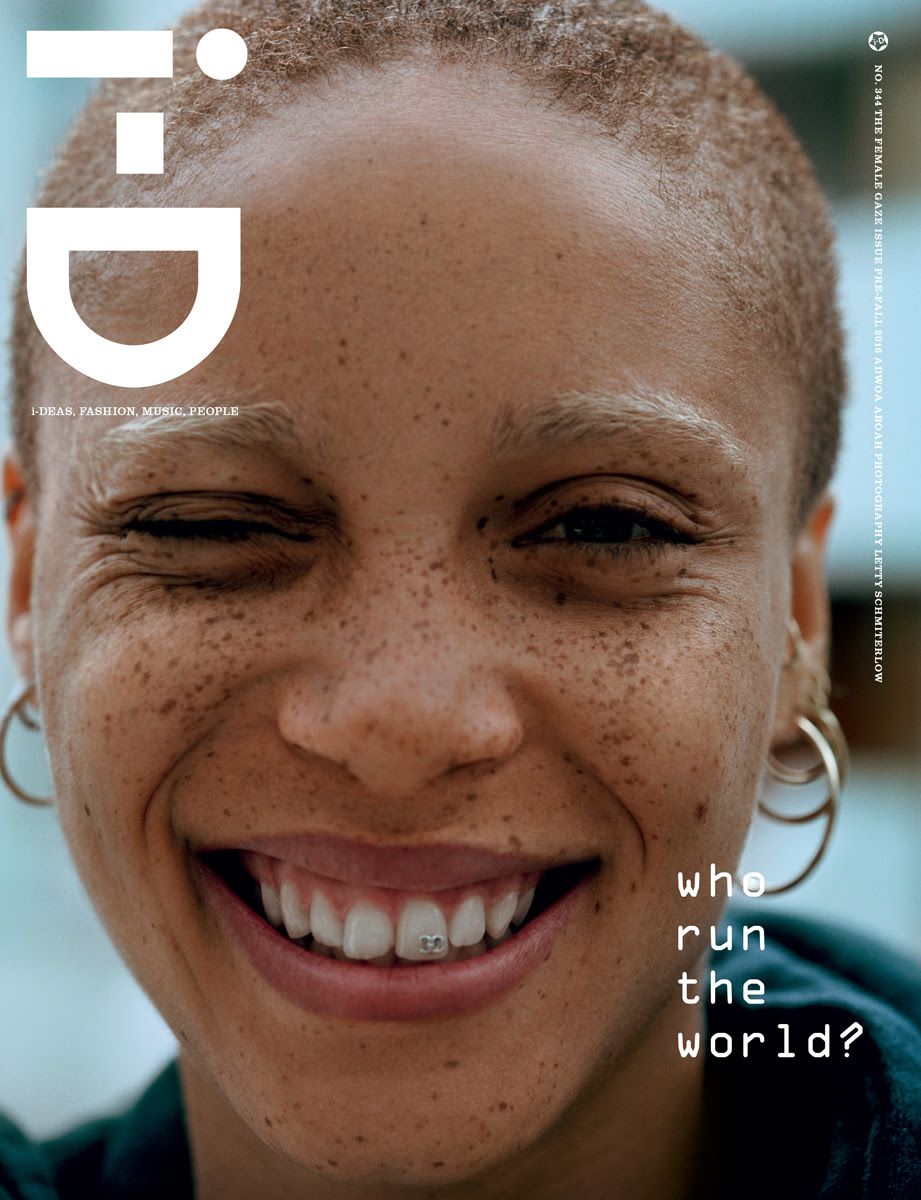
Traditional ”High Fashion” mags – Vogue, Harper’s Bazaar
Edgy/alternative fashion mags: i-D, Dazed
Conventions
Masthead – Vertical, on top of head
Coverlines
White Slim women
Young women
3 colour scheme
MS/MCU
Masthead – vertical/horizontal
Behind head
Coverlines – only one for young women
Muted colour
No make-up/styling
Serif Typography – modern, edgy

Representations
White, young, blonde
Mid shot
Mix race, non-white
Dull – like/gothic
Not sexualised – direct address
Audience
Older audience
Direct address
Diverse
Younger?
Direct address


Monday, 12 March 2018

Test Plan

How do audiences interact and get actively involved with video games? What is the role of specialised audiences, including fans, to gaming? Refer to Minecraft to support your answer

Henry Jenkins created a few terms to explain how audiences interact with video games. Firstly, he has created the term “Media Convergence”, which means the flow of content across multiple media platforms, the cooperation between multiple media industries, and the migratory behaviour of media audiences who will go almost anywhere in search of the kinds of entertainment experiences they want. This leads to Textual Poaching which means the fans “poach” textual meanings and reread them in a fashion that serves different interests. An example of this is DanTDM; he "poaches" content from Minecraft and he makes it into his own content so that his fans stay interested and he uploads it to the platform of Youtube. He is an example of the term Fandom, which refers to the social structures and cultural practices created by the most passionately engaged consumers of mass media properties.

In effects theory, the media are powerful, negative forces who control the masses. The media is seen as a hypodermic needle, injecting out helpless minds with messages which we take on board fully. This originated from a new notorious study carried out by bandura in 1961. Bandura's study used a toy called a "bobo doll", and it measured behaviours of children who watched a model beating up the doll. The model was either rewarded or punished, and Bandura noted that children would replicate the violent behaviour when it was rewarded.

Cohen in 1972 published a book "Folk Devils and Moral Panics". Moral panics happen when members of a society and culture become outraged, fearful and upset by the challenges and menaces posed to 'their' accepted values and was of life, by the activities of groups defines as deviant. These could be violent extremists, teenagers or an organisation/idea such as the internet, violent games or social media.

Explain the impact of evolving technology on film production, distribution, and exhibition. Refer to Snow White and the Seven Dwarfs and Black Panther.

Technology has massively impacted the production, distribution and exhibition of Black Panther compared to Snow White and the Seven Dwarfs.

As Disney, the distributor of  Black Panther, is a conglomerate that owns soo many subsidiaries to give them profit, the film got a whopping 200 million dollers to produce the film. This means that the director, Ryan Coogler, has enough money to pay the actor’s salaries, production staff salaries, set construction, special effects, wardrobe, craft services, marketing and buying the rights to the script. On the other hand, Disney wasn't a conglomerate back then and Walt Disney only has 1.4 million dollars to produce the film which is incredibly less than Black Panther.


Marvel Studios has a wide range of platforms using technology to promote their film. They have made 3 trailers and have released them on YouTube as well as Facebook, Twitter, Instagram and they have created an advertisement on Snapchat. The official trailer has had 18 million views, 7.2 million views on Facebook and 103 posts and 203 thousand followers on Instagram. The trailers have also been shown on big television companies (ITV for example) in the UK. Whereas, for Snow White, technology wasn't advanced as it is today so they are restricted to make promotional posters and advertise them outside cinemas and on billboards so that the audience can walk past it and spread it through word of mouth.

Marvel has managed to get a partnership with the car manufacturer Lexus. Both brands can promote each other to increase their sales and their profit. Lexus has used the characters from the Black Panther film to advertise the performance and the luxury of the car. In addition, the film takes this opportunity to show off its characters as well as what the audience can expect from it like action and adventure. Nevertheless, cars didn't have any technological advantages in the 1930s, therefore, in cinemas, Snow White merchandise is being sold. This includes masks, mugs, shirts, caps, bags, dolls etcetera. This is the only source of income for the film but Black Panther gets incredibly more because they have a share of the sales of every Lexus car as well as selling Black Panther merchandise.

It's because of technology that Black Panther has done well in terms of its production, distribution and exhibition, however, technology was only starting to develop in the 1930s, therefore, Snow White has lost a lot of profit. 
Henry Jenkins’ Theory of ‘Fandom’

Henry Jenkins’ Theory of ‘Fandom’

Henry Jenkins is an influential media theorist who has made the book named Textual Poachers in 1992. It describes how communities in online and digital media combine numerous different media sources and channels in both approved and unapproved ways.  He has created terms modern media theorists still use today. Firstly, he has created the term “Media Convergence”, which means the flow of content across multiple media platforms, the cooperation between multiple media industries, and the migratory behaviour of media audiences who will go almost anywhere in search of the kinds of entertainment experiences they want. This then leads to Textual Poaching which is when the fans carried out such creative cultural activities as rethinking personal identity issues such as gender and sexuality; writing stories to shift focus onto a media "storyworld's" secondary characters; producing content to expand of the timelines of a storyworld; or filling in missing scenes in the storyworld's official narratives order to better satisfy the fan community. An example of this is Star Trek; the fans “poach” textual meanings and reread them in a fashion that serves different interests. He has also made Participatory Culture which refers more broadly to any kind of cultural production which starts at the grassroots level and which is open to broad participation and Fandom which refers to the social structures and cultural practices created by the most passionately engaged consumers of mass media properties.

Over the last 50 years, technology has advanced dramatically, meaning that gaming platforms have originated from arcade machines in stores to consoles at people’s homes. This has allowed some game developers to create games that are able to connect players from multiple gaming platforms and play with each other seamlessly. The second best-selling game with 144 million sales, Minecraft made by Markus Persson now owned by Microsoft is the first game to introduce the term “Cross-Platform Gaming”.  Everybody in the gaming community thought it was impossible to accomplish but it was successful. Minecraft was now encouraged other game developers to allow their games to support cross-platform play. Now there is a total of 132 games that support this feature which allows players to play their games and their games will last for a longer duration. Synergy meaning the way in which an element of a media conglomerate or different companies works together to promote linked products allows different gaming platforms to converge their games.

With more games being produced, some gamers will not like the gameplay or how the game performs. Therefore, they use modifications (“mods”) to alter any game into their own version. This only happens to cheap games or games that have little or no security. Game “Modders” are from Participatory Cultures that originated roughly from the post-2000 and when Web 2.0 was introduced. This is because they are creative people who produce new games of their own and they collaborate to solve the problems which force them to change the aspect of the game. This then generates what Jenkins describes as “Collective Intelligence” which is when media causes a buzz in consumer communities which are of increasing value to media producers.


Media 2.0 was also introduced shortly after Web 2.0 and it starts with a platform that enables the community to create a digital identity which gives them the ability to connect and share with one another. After this, they create content which is user-generated but the community managers look to differentiate their content with others within the community.

Monday, 5 March 2018

Fandom - Henry Jenkins 05/03/18

Henry Jenkins

  • Henry Jenkins is an influential Media theorist, who is interested in Media in the online world, or Media 2.0.  Since the emergence of the internet as a participatory, interactive medium, there has been a great deal of writing about how this has transformed audiences, institutions and the nature of media products.  Jenkins looks at many areas, but for this topic, his 1992 1992 book Textual Poachers: Television Fans and Participatory Culture is particularly important.
Textual Poachers
  • Jenkins' research in Textual Poachers showed how fans construct their own culture by appropriating and remixing—"poaching"—content from mass culture. Through this "poaching", the fans carried out such creative cultural activities as rethinking personal identity issues such as gender and sexuality; writing stories to shift focus onto a media "storyworld's" secondary characters; producing content to expand of the timelines of a storyworld; or filling in missing scenes in the storyworld's official narratives order to better satisfy the fan community.
Jenkins' (Inter)active Audience Approach
  • Jenkins belongs to a group of Media thinkers who are highly optimistic about the Media.  They view the Media, and Web 2.0 as empowering to the audience, breaking down traditional boundaries of class and status. The audience is interactive and powerful.  They can participate and create their own narratives, questioning messages and generating their own ideas.
  • Jenkins, Shirky and others clearly contrast with the more traditional media effects theory models, which see the media as powerful and the audience as passive.
Participatory Culture
  • Jenkins noted that the development of “new” Media (roughly post 2000) has accelerated “participatory culture”, in which audiences are active and creative participants rather than passive consumers. They create online communities, produce new creative forms, collaborate to solve problems, and shape the flow of media. This generates what Jenkins describes as “collective intelligence.”
Three Key Terms From Jenkins
  • Fandom refers to the social structures and cultural practices created by the most passionately engaged consumers of mass media properties
  • Participatory culture refers more broadly to any kind of cultural production which starts at the grassroots level and which is open to broad participation
  • Web 2.0 is a business model that sustains many web-based projects that rely on principles such as user-creation and moderation, social networking, and "crowdsourcing."

Henry Jenkins' Theory Homework

Media Convergence Definition

  • By convergence, he means the flow of content across multiple media platforms, the cooperation between multiple media industries, and the migratory behaviour of media audiences who will go almost anywhere in search of the kinds of entertainment experiences they want.
  • Convergence is a word that manages to describe technological, industrial, cultural, and social changes depending on who’s speaking and what they think they are talking about.
Checking 'Audiences'
  • Jenkins makes the argument that convergence is less about a technological process and more about a cultural shift as consumers are encouraged to seek out new information and make connections amongst dispersed media content.
  • The audience itself has become labelled as ‘eyeballs.’ 
Participatory Cultures
  • A change whereby rather than media producers and consumers occupying separate roles, they now interact with each other ‘according to a new set of rules,’ which nobody as yet fully understands.
  • Some consumers have a greater ability to ‘participate’ in this emerging culture than others.
Collective Intelligence
  • A term first coined by French cybertheorist Pierre Levy
  • Media causes a buzz in consumer communities which are of increasing value to media producers.
  • Subsequently, consumption has become a collective process by which we pool our resources and combine our skills. 

Monday, 26 February 2018

Synergy Meanings

Synergy - the interaction of two or more forces working together to create a greater impact than what would be created individually

Synergy in Media - the way in which an element of a media conglomerate or different companies work together to promote linked products

Cross Platform Gaming Homework


  1. Cross platform gaming means that a video game has the ability to allow players to play a game like Minecraft simultaneously on different gaming hardware.
  2. The "Better Together" update is so exciting for the gaming world because it takes different versions of Minecraft that have been available on PC, Xbox, iOS, and Android, and consolidates them into one master version, with same features, functionality and content matter where you play. This update allows players from the listed platforms to play together without any restrictions.
  3. There might be concerns over online child protection because there are some content in games that are inappropriate for children for example Call of Duty and Battlefield. These games portray murder, blood and guns in them and parents will not allow their children to mimic the actions they see for them to get into trouble. For example, Fortnite has murder in it and PlayStation didn't agree to play with other platforms because of that reason.
  4. I think that it is a good idea to have cross-platform games because people from different gaming platforms are able to play together without no restrictions; there will be no barrier in between them. This also allows players to jump from one server that is specific to a gaming platform to another to play with their friends. This also makes games last longer as their "shelf life" would be expanded meaning that the game will not get old soon. However, the server might have to much strain and it will ultimately crash therefore players are unable to play the game that they want so the developers will have complains. Secondly, there might be lack of compatibility in terms on controls. Gaming hardware all differ from their controls/controllers so the developers will have to change the controls for them to best suit the console and that will take some time. Also, some people might not like the controls so that will further delay them. Finally, different gaming platforms might have different policies. For example, Xbox might find an action unacceptable whereas for PC they are allowed. Therefore, the developers need to make up a policy that pleases all gaming platforms for cross-platforming to be allowed so this is a huge drawback when they are trying to persuade gaming platforms.

Friday, 23 February 2018

Lion King Teaser

I am going to make a teaser for the upcoming live action Disney blockbuster film "The Lion King".

I am going to have a range of Social Media strategies. Firstly, I am going to tame a harmless cubs (baby lions) and I'm going to let it walk by itself around the streets of cities. Every cub will have a supervisor so that they don't get into any trouble. Each of them will have a poster on their bodies saying "I just can't wait to be king!". This whole act is a reference to the Lion King film. It's about Simba singing a song about his ambition to be King. Some people in the public will be confused while most will know the reference. Furthermore, I will make a documentary about Lions in Kenya. The title of the documentary will be named "Lion's Dominance"and it will portray how they show dominance to a tribe. The location wouldn't be mentioned however some landscapes of Kenya will be shown so that some people will know the purpose of the documentary. The last teaser is a tip from Rafiki explaining how to be a successful King to the tribe. It will be a live action filming and afterwards a 5 second teaser from the film will show. The last teaser will give most information of the film to the audience. All of the strategies will be posted on YouTube and short clips will be shown on Facebook, Instagram, Snapchat and Twitter with hyperlinks to watch the full video on YouTube.


Lion King has products such as toys and stuffed toys, keychains, towels, pajamas, t-shirts, mugs, bags etc.

Friday, 16 February 2018

Black Panther Case Study

Black Panther Case Study

The film “Black Panther” comes out on February 12th, 2018 from the production company Marvel Studios.  Marvel Studios have been founded 25 years ago in 1993 and they created films based on Marvel comics mainly by Stan Lee. They are responsible for creating blockbuster films such as The Avengers Series, Spider-Man Homecoming (the “Spider-Man” franchise is licensed to Sony Pictures), Thor, Captain America, Guardians of the Galaxy, Doctor Strange, Iron Man and the Hulk. Marvel Studios is now a subsidiary of Walt Disney Studios which is a division of the conglomerate The Walt Disney Company from 2009.

The main characters are made up of black people: Chadwick Boseman, Michael B. Jordan, Lupita Nyong'o, Danai Gurira, Forest Whitaker, Angela Bassett and Daniel Kaluuya. Danai Gurira is best known for her role on The Walking Dead, Forest Whitaker and his Rogue One: A Star Wars Story role, and Danial Kaluuya's role in the horror film Get Out. The reason why the director, Ryan Coogler, hired these cast members to represent the Black Panther Party. They are an African American Revolutionary Party and their purpose is to patrol the African American neighbourhoods and to protect residents from the acts of police brutality.

The production budget is not officially announced but it is estimated to be 200 million dollars. It must include the pre-production, filming, post-production and promotion. This includes buying the rights to the script, the actor’s salaries, production staff salaries, set construction, special effects, wardrobe, craft services, and marketing. This approximately costs 106 million dollars but all of these attributes can vary, for example, the size of the actors, the amount of special effects that need to be used or how much the rights of the film costs.

Marvel Studios has a wide range of platforms to promote their film. They have made 3 trailers and have released them on YouTube as well as Facebook, Twitter, Instagram and they have created an advertisement on Snapchat. The official trailer has had 18 million views, 7.2 million views on Facebook and 103 posts and 203 thousand followers on Instagram. The trailers have also been shown on big television companies (BBC and ITV for example) in the UK. Black Panther has several promotional posters in cinemas and on London’s transport like TFL. They also have billboards in America with some of them popping out of the billboard.

Black Panther has a wide range of licensed products for Marvel to sell to promote the film. This includes stuffed toys based on the Black Panther’s suit, masks, claws, mugs, shirts, caps, bags, the upper torso of black panther’s suit, action figures et cetera. The film needs to sell its merchandise so that they can pay the people who have worked on the movie. For example, actors, director, production team, composer as well as the marketing team will all have their cut mainly from the licensed products. The rest of the money will be for Marvel, however, Disney will get some of their shares too.

Marvel has managed to get a partnership with the car manufacturer Lexus. Black Panther’s flagship is the Lexus’ “LS 500 F Sport luxury saloon”. Both brands can promote each other to increase their sales and their profit. Lexus has used the characters from the Black Panther film to advertise the performance and the luxury of the car. In addition, the film takes this opportunity to show off its characters as well as what the audience can expect from it like action and adventure.


Disney uses the money they get from Marvel Studios for them to help the other divisions within its business. The money that they have gotten help other production companies like Lucasfilm, Pixar and Walt Disney Animation Studios. The money will also assist Disney Parks and Resorts, Media Networks, and Consumer Products and Interactive Media. Those main divisions get split into many other subsidiaries as well as having some of the money for their revenue. The many subsidiaries that Disney owns are the reason why they are the world second largest media conglomerate and their expansion will only get greater over the years. 

Thursday, 8 February 2018

08/02/18

The Walt Disney Company

  • Founded by Walt and his brother in 1923
  • Started by making short animations to be shown as part of a cinema programme
  • 1928 Steamboat Willie (1st Mickey Mouse)
  • 1937 Snow White and the Seven Dwarfs (1st Feature length animation) Distributed by RKO
Snow White
  • It is the 10th most popular film.
  • Premiere December 1937
  • Released in 2 cinemas (New York and Miami) January 1938
  • General Release February 1938
  • Box Office $7 million
  • Re-released: 1944, 1952, 1958, 1967, 1975, 1983, 1987 and 1993 
  • Total Box Office: $180 million (about $1 Billion when adjusted for inflation)
Disney Timeline
  • 1950 - First ‘live action’ films start
  • 1950 - Starts working in TV
  • 1955 - Mickey Mouse Club on TV
  • 1955 - Disneyland opens
  • 1964 - Mary Poppins released (nominated for Oscars)
  • 1966 - Walt dies
How the money is split
  • Disney’s net worth $92bn
  • Company valued at about $150bn


Monday, 5 February 2018

05/02/18

"The Guardian" - Violent games and Aggression

  • Problems with genre and games - 1st person shooter like CoD iis different from war strategy games
  • Study: the author was not a neurologist
  • Conduct disorder - stealing, fighting 8-9 years over several years; upto the age of 15.
  • Study does not look at social factors e.g. existing mental health, conduct disorder
  • Weak link between violent gaming is aggressive behaviour but this might just be competitiveness - refutes effects theories - counteracts moral panics

Friday, 2 February 2018

Black Panther Homework

Production Company

  • Marvel Studios, which is owned by Disney, is producing this film.
Casting
  • The main characters are made up of black people: Chadwick Boseman, Michael B. Jordan, Lupita Nyong'o, Danai Gurira, Forest Whitaker, Angela Bassett and Daniel Kaluuya.
  • Danai Gurira is best known for her role on The Walking Dead, Forest Whitaker and his Rogue One: A Star Wars Story role, and Danial Kaluuya's role in the horror film Get Out.
  • The reason why the director, Ryan Coogler, hired these cast members to represent the Black Panther Party. They are an African American Revolutionary Party and their purpose is to patrol the African American neighbourhoods an to protect residents from the acts of police brutality.
Production Budget
  • It is not officially said, but it is estimated to be $200m
License Products


Image result for black panther license products
  • There are little products produced to promote the Black Panther film.
Brand Partnerships

Image result for black panther brand partnerships
  • The film has a brand partnership with the car manufacturer Lexus so the movie can promote the car and the car can promote the movie. This works either way.